

Meier, Änne

About Änne Meier
NS resister, carer
Early life, professional career and social commitment
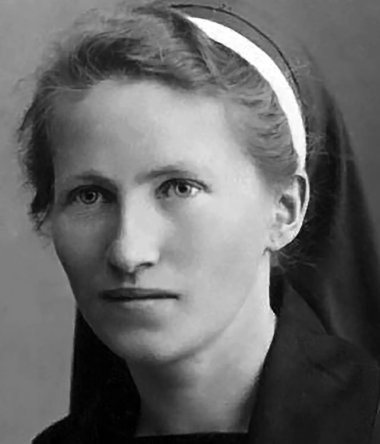
Änne Meier was born on 3 January 1896 in Baltersweiler as the fifth of seven children into a politically committed Catholic family of farmers and craftsmen. She received an unusually comprehensive education for the time. Her parents supported her education and made it possible for her to be the first girl in her village to attend the "Höhere Mädchenschule" in St. Wendel and the Königliches Lehrerinnenseminar in Saarburg.[1] The profession of teacher forced Änne to forego marriage and children, as marriage meant the end of her career at the time.
She initially worked as a substitute teacher in Brücken near Birkenfeld, but soon lost this job due to the teachers returning from the war, whereupon Meier turned to social pedagogy.[2] After the First World War, she began studying at the Catholic Social Women's School in Heidelberg, where she first came into contact with Catholic youth organisations and personalities from the liturgical renewal movement. Through these contacts, she began to question the official church as an untouchable institution, but her attitude towards the Catholic faith remained intact.
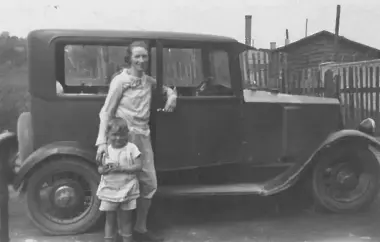
After completing her studies, Änne worked at the Homburg District Welfare Office from 1921 as one of the first welfare workers in the Saar region. In 1925, she moved to the St. Ingbert district welfare office, which she played a key role in setting up. In her job, she looked after families in financial difficulties, the sick and people with disabilities, for example. She also volunteered in youth work, particularly with the Girl Scouts. In the early 1930s, Änne Meier became the Gaufeldmeister of several girl scout groups in the Saar region and in Baden. She was progressive, obtained a driving licence and owned her own car for her home visits and to look after the Girl Scouts, which was a rarity for women at the time[3].
Resistance against the Nazi regime and imprisonment
Due to her religious background and upbringing, Änne Meier recognised the dangers posed by National Socialism early on. Reading Hitler's "Mein Kampf" reinforced her negative attitude. From 1934, she used the independent newspaper "Neue Saarpost"[4] to inform herself about the situation in the Reich, as the other Saarland newspapers had already been brought into line by this time.
During the Saar referendum in 1935, she spoke out in favour of the status quo and thus opposed the position of the official church, which openly advocated reincorporation. She never regretted her decision.[5] Änne Meier resisted both in her professional and everyday life. She refused to give the Hitler salute or join Nazi organisations[6], which led to considerable difficulties: Her civil servant status was revoked and she was no longer considered for promotions[7].
In 1933, the so-called "Law for the Prevention of Hereditarily Diseased Offspring" was passed, which was to lead to the forced sterilisation of people with, for example, mental illnesses, hereditary blindness or deafness.[8] For reasons of conscience, Änne Meier withheld hereditary biology documents on tuberculosis cases from her district, which she had researched in her spare time from 1930[9] onwards, and refused to hand them over in 1936 despite requests from her superiors.[10] Despite increasing sanctions and bans, Änne Meier managed to continue her youth groups in secret[11] and to distribute banned writings on religious and contemporary history, including the so-called "Galen Letters", in which Bishop von Galen spoke out against the "euthanasia" of people with mental or incurable illnesses[12].
On 21 January 1942, she was arrested by the Gestapo for copying and passing on these writings and, after ten weeks in solitary confinement in Lerchesflur without trial or conviction - solely on suspicion of "conspiratorial activity"[13] - was taken to the Ravensbrück women's concentration camp in Mecklenburg in April 1942.[14] There, after a four-week quarantine, she did all kinds of work: For example, she worked "with the knitters, in the fur tailoring department and finally in the prisoners' allowance administration"[15]. In the camp, she remained true to her religious beliefs, supported fellow prisoners and prayed with them.[16] She was often ill and was once sent to the extermination block to die after 14 days of fever, but was able to survive with the help of two fellow prisoners.[17] She remained imprisoned in Ravensbrück until the end of the war, when she managed to break away from the column on the death march to Neustrelitz in April 1945 and reach Schwerin after a few days. After almost three months and an arduous journey home, she arrived back in Saarland in July 1945[18].
Post-war period and legacy
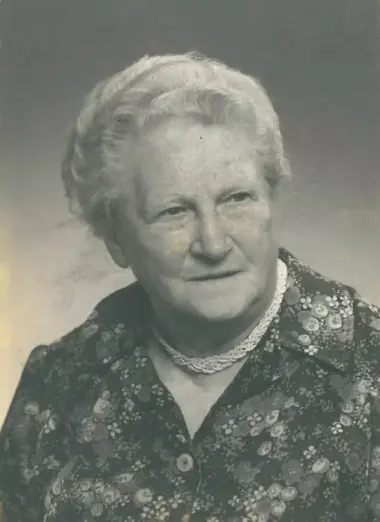
Änne Meier resumed her work at the district office in October 1945 and worked there in her old position until her retirement in 1958, initially in refugee welfare and later as a clerk for the reparation of politically persecuted persons.[19] Despite her disappointment at how quickly it was back to business as usual and the physical damage she suffered during her time in prison,[20] her spirit could not be broken. She remained involved in numerous organisations into old age, including the international peace movement "Pax Christi" and the "Ravensbrück Camp Community"[21].
The latter was founded by former prisoners of the women's concentration camp after the war, who came together every year to dedicate themselves to education and the fight against the resurgence of National Socialism. Änne saw her educational work as her most important task: she documented memories and concentration camp reports, which she handed over to the archives of the VVN (Association of Persecutees of the Nazi Regime) in order to fight against forgetting.[22] She co-founded the Adolf Bender Centre in St. Wendel in 1985. Wendel in 1985.[23] She took part in demonstrations and actions (e.g. alternative tours to the sites of resistance and persecution in the Third Reich) with socially critical commitment and also took to the streets in defence of her convictions.[24]
Änne Meier was awarded the Federal Cross of Merit First Class on 26 May 1988 for her upright resistance against the National Socialist regime in her profession and honorary office.[25] But even after her death on 20 July 1989, she left her mark on her hometown: a special school was named after her in 1997 and "Änne-Meier-Platz" was inaugurated in 2014.[26] Since 2018, there has been a stumbling block dedicated to her in St. Ingbert in front of the house where she was arrested in 1942[27].
Written by: Jeanne Blaes, student of historically orientated cultural studies at Saarland University
Published: 09.02.2026; Last updated: 31.03.2026.
Quotes
I knew that I was carrying the cross."
Adolf-Bender-Zentrum e.V.: Änne Meier, p. 51.
I was scorched to the roots. I could no longer sympathise, could no longer rejoice and wondered why people could behave so civilly and hospitably."
Wenke: Interview with Änne Meier, p. 253. Änne Meier on her feelings after returning home.
I am ashamed of my people, who were capable of committing such atrocities."
Ibid, p. 255. Änne Meier on her time in the concentration camp.
Nothing should be forgotten or suppressed. It could happen again, we are well on the way. [...] I'm afraid that it will happen again. Not to us, but to others. Not in the same form."
ibid, p.256. Änne Meier on her commitment as a contemporary witness.
Her life story vividly demonstrates that Christian faith does not necessarily have to be identical with blind obedience to the authority of the church as an institution, but can instead have an inherent power to contradict."
Mallmann / Paul: Das zersplitterte Nein, p. 176. The authors Mallmann and Paul on Änne Meier.
Footnotes
[1] Mallmann, Klaus-Michael / Paul, Gerhard: Das zersplitterte Nein: Saarländer gegen Hitler. Bonn 1989, p. 177.
[2] Adolf-Bender-Zentrum e.V. (ed.): Änne Meier. "I knew that I was carrying the cross". An example of resistance and persecution during the Nazi era. St Ingbert 1995, p. 17.
[3] Ibid, p. 22.
[4] Mallmann / Paul: Das zersplitterte Nein, p. 178.
[5] Adolf-Bender-Zentrum e.V.: Änne Meier, p. 30.
[6] Wenke, Bettina: "I knew that I was carrying the cross. Interview with Änne Meier." In: Wenke, Bettina (ed.): Interviews with survivors. Persecution and Resistance in Southwest Germany. Stuttgart 1980, p. 244.
[7] Mallmann / Paul: Das zersplitterte Nein, p. 180.
[8] Braß, Christoph: Forced sterilisation and 'euthanasia' in the Saarland 1933-1945. Paderborn 2004, p. 54f.
[9] Ibid, p. 177.
[10] Adolf-Bender-Zentrum e.V.: Änne Meier, p. 33.
[11] Wenke: Interview with Änne Meier, p. 243.
[12] Ibid. p. 245f.
[13] Mallmann / Paul: Das zersplitterte Nein, p. 177.
[14] Wenke: Interview with Änne Meier, p. 246f.
[15] Mallmann / Paul: Das zersplitterte Nein, p. 180.
[16] Wenke: Interview with Änne Meier, p. 251.
[17] Ibid, p. 251.
[18] Ibid, p. 252f.
[19] Mallmann / Paul: Das zersplitterte Nein, p. 180f.
[20] Wenke: Interview with Änne Meier, p. 254f.
[21] Ibid, p. 258f.
[22] Ibid, p. 256.
[23] Adolf-Bender-Zentrum e.V.: "Association for the Promotion of Democratic Tradition". Online at: https://adolfbender.de/ueber-uns/verein/ (last accessed: 20/11/2025).
[24] Adolf-Bender-Zentrum e.V.: Änne Meier, p. 51.
[25] Mallmann / Paul: Das zersplitterte Neins, p. 181.
[26] Kihm, Herbert: "Änne Meier". Online at: https://www.saarland-lese.de/persoenlichkeiten/m/meier-aenne/aenne-meier/ (last accessed: 20/11/2025).
[27] Schetting, Manfred: "Remembrance of a courageous woman". In: Saarbrücker Zeitung, online at: https://www.saarbruecker-zeitung.de/saarland/saar-pfalz-kreis/sanktingbert/gedenkfeier-am-stolperstein-fuer-aenne-meier-in-st-ingbert_aid-65525901 (last accessed: 20 November 2025).
Further reading / literature / sources
Adolf-Bender-Zentrum e.V. (ed.): Änne Meier. "I knew that I was carrying the cross". An example of resistance and persecution during the Nazi era. St Ingbert 1995.
Adolf-Bender-Zentrum e.V.: "Association for the Promotion of Democratic Tradition". Online at: https://adolfbender.de/ueber-uns/verein/ (last accessed: 20 November 2025).
Braß, Christoph: Forced sterilisation and 'euthanasia' in Saarland 1933-1945. Paderborn 2004, p. 177f., 282.
Kihm, Herbert: "Änne Meier". Online at: https://www.saarland-lese.de/
persoenlichkeiten/m/meier-aenne/aenne-meier/ (last accessed: 20 November 2025).
Mallmann, Klaus-Michael / Paul, Gerhard: The splintered No. Saarlanders against Hitler. Bonn 1989, pp. 176-181.
Schetting, Manfred: "Remembrance of a courageous woman". In: Saarbrücker Zeitung, online at: https://www.saarbruecker-zeitung.de/saarland/saar-pfalz-kreis/sanktingbert/
gedenkfeier-am-stolperstein-fuer-aenne-meier-in-st-ingbert_aid-65525901 (last accessed: 20 November 2025).
Wenke, Bettina: "I knew that I was carrying the cross. Interview with Änne Meier." In: Wenke, Bettina (ed.): Interviews with survivors. Persecution and Resistance in Southwest Germany. Stuttgart 1980, pp. 241-259.
Supported by: