
About Anneliese Hutzler
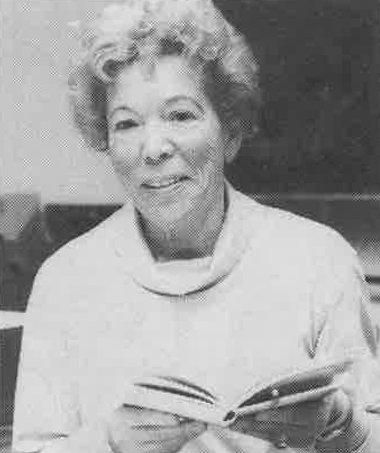
Author and journalist
In her feature articles, travelogues and books for young people, Anneliese Hutzler has covered a wide variety of topics, which have attracted widespread interest beyond her adopted home in the Saarpfalz district.
Ways to get your work published for the first time
The author was born in 1922 as Anneliese Nilles in Saarbrücken-Altenkessel and, after primary school, attended a French state school[1]. By the age of ten, she was already writing her own fairy tales and fables[2]. Thanks to the help of a teacher, these were even published in the *Saarbrücker Kinderpost* and earned the young girl her first few pfennigs in royalties[3].
Initially, however, she put her writing on hold and completed a commercial apprenticeship, followed by a degree in French and Italian[4]. She then worked as a translator and interpreter in Germany, France and Italy. It was, amongst other things, her love of foreign languages – as the author later explained in retrospect – that led her to take up writing once more[5]. Thus, in 1950, she published her first work, a travelogue entitled *Sizilianische Streiflichter*[6]. Her passion for travel was to inspire a series of further works in the years that followed.
Head of the Export Secretariat at Karlsberg Brewery
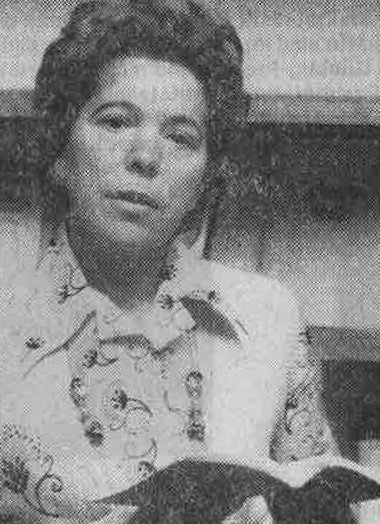
Also in 1950, she married the architect Hans Hutzler and moved to his home town of Homburg, where she soon afterwards, in 1954, took over as head of the export secretariat at the Karlsberg Brewery[7]. There, her fluent writing style not only caught the eye of her boss, Dr Paul Weber, but also impressed the future DFB president Hermann Neuberger, who was also working at the brewery at the time and was an editor at a Saarland sports newspaper[8].
He subsequently hired Anneliese Hutzler whenever the regular editor of the women’s section of his magazine was unavailable[9]. The author wrote reports for the magazine on fashion shows in Paris and ‘Impressions from the City of Lights on the Seine’[10]. She is also said to have recorded her impressions from business trips in country reports during this early stage of her writing career[11]. It was now that she first began publishing socially critical observations, columns and satires in the press[12]. In 1959, she gave up her career as an interpreter – and with it her job at the brewery – and began working as a freelancer for the press and radio[13].
Writing and journalism
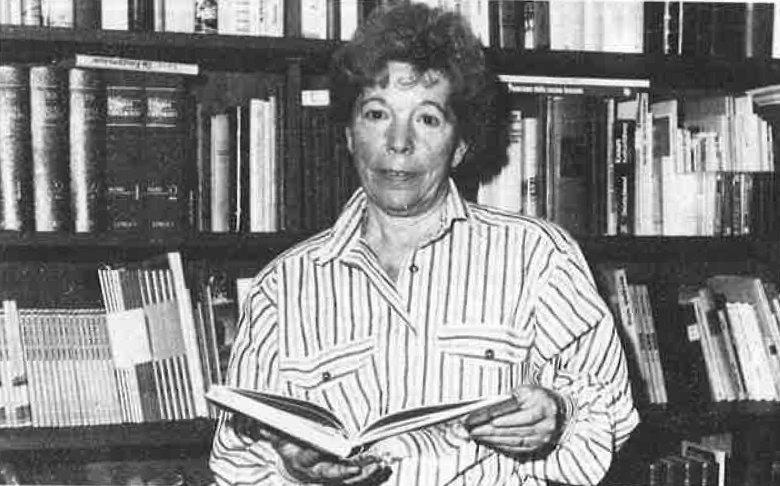
Since then, her travelogues, feature articles and social commentary have been published in Germany, as well as in Austria, Australia and South America[14]. Her writings have appeared in publications including the *Saarbrücker Zeitung*, the *Frankfurter Allgemeine* and *Die Welt*, as well as in magazines such as *Der Literat*, *Welt der Frau* and *Merian*, and were broadcast on stations including Saarländischer Rundfunk, SWF and Hessischer Rundfunk[15]. In an interview with the *Saarbrücker Zeitung* in 1996, Anneliese Hutzler said that she must have written hundreds of feature articles[16]. This form of writing was particularly close to her heart, and it eventually led to the publication of two anthologies.
The fact that many of her pieces were also broadcast on SR radio was no doubt due, amongst other things, to the presenter Klaus Groth, who was so enthusiastic about the author’s very first submission to the ‘Bunte Funkminuten’ programme that he asked for more material the very next day[17]. In this way, the arts and culture features reached an even wider audience in their audio form. Reports written by Hutzler, such as those on educational opportunities for girls or loneliness amongst elderly women, were also broadcast on SR[18].
In addition, Anneliese Hutzler translated the play *Tage im Schatten* by Barbara Nunez del Castillo from Italian into German and wrote two books for young people in the 1960s[19]: By this time, she was the mother of two children[20], and when her daughter Christine fell seriously ill whilst on holiday in Austria and spent six weeks alone in an isolation ward, the author began writing stories about a donkey in rural Italy, sending them to the hospital chapter by chapter[21]. After her daughter’s recovery, the stories about the donkey “Anastasio” were published in 1966 as a young adult novel of the same name, bringing them together in one volume. The book was even translated into Danish and adapted for the screen by the NDR[22]. As a result, two episodes of ‘Anastasio’, each lasting between twenty and thirty minutes, were broadcast as part of the ARD’s afternoon programme in September 1969[23]. Unfortunately, the programmes were not archived; however, the contract documents show that the broadcaster intended to produce a ‘picture story’, which is why it was probably a kind of animated film[24].
The story of the donkey ‘Cesarina’ follows on from the first children’s book; the author published it in 1968, and it was reissued in 1972 as part of an anthology alongside the first part, under the title ‘Two Little Donkeys and All Sorts of Adventures’. In the same year, the stories were also transcribed into Braille[25]. With five episodes each, ‘Anastasio’ and ‘Cesarina’ were also broadcast as radio programmes on SR in 1967 and 1968.
Your topics
In a radio interview in 1973, Anneliese Hutzler described her self-image as a writer as that of a ‘communicator’ whose ‘duty is to offer guidance in life’[26]. She wishes to “counteract the isolation of people […]”, focusing in particular on social minorities[27].
Many of her feature articles, for instance, deal with the housewife or with everyday life as a woman and mother[28]. With humour and irony, the author incisively portrays the expectations and realities of many women of the time, and does not shy away from addressing the darker sides, such as depression. Her radio programmes on SR also demonstrate that the social discourse surrounding the ‘housewife concept’ was a matter close to her heart. In one such programme, for example, she advocates for the education of girls and argues that better-educated women also make better partners and wives. Furthermore, she suggests that women who return to work after raising their children are better protected against financial and psychological dependence on their husbands[29]. The author also turns her attention to women who are lonely in old age because they have not learnt a trade and have few social contacts, and, amongst other things, promotes courses at the adult education centre (VHS)[30]. In this context, she acts as the writer of the radio programmes, but not as the presenter.
Her feature articles also deal more generally with family histories and relationship dynamics. Biographical elements are often strongly suggested here[31]. In 1996, the author even stated in an interview with the *Saarbrücker Zeitung* that she was working on a family saga[32], but this was never published.
In her works, Anneliese Hutzler also adopts perspectives other than her own; in *Die einsamen Sonntagsmänner* (1965), for example, she writes about migrant workers, whilst in *Dilan im fremden Land* (1989) about the sometimes lonely everyday life of a woman of Turkish origin who does not speak German[33]. Her repertoire also includes more absurd stories, such as one about the evolution of the handkerchief[34], as well as numerous texts on travel[35]. The author has even produced texts in the Saarland dialect, pieces on the act of writing itself, and a poem[36]. She stated that the ideas for her diverse works came to her whilst travelling and whilst doing housework, ‘especially whilst ironing’[37].
Commitment and awards
For many years, the author served on the executive committee of the Saarland Writers’ Association and acted as spokesperson for the independent authors of the German association at Saarland Broadcasting[38]. She was also a member of the Literary Association of the Palatinate, where she received a special honour in 1974 when her collected works, *Durchblicke*, were published as the association’s annual gift.
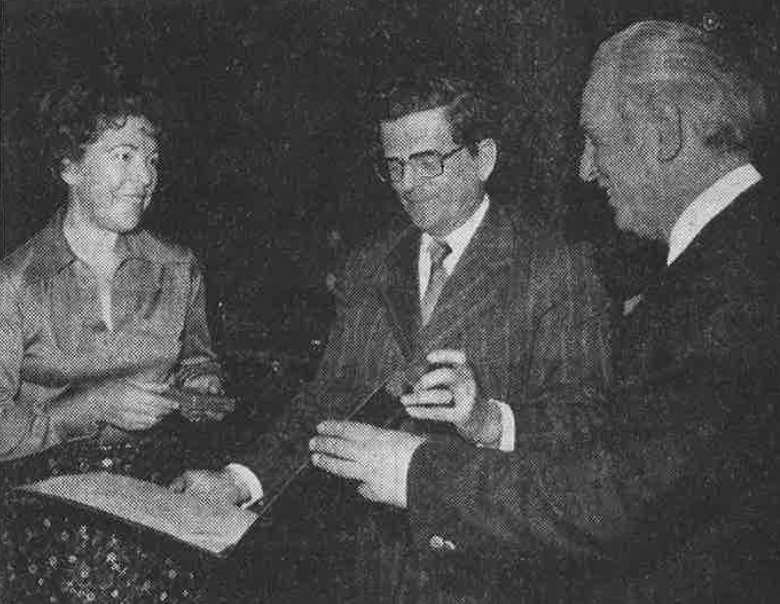
Her achievements were recognised, amongst other things, in 1972, when she was awarded a scholarship to study abroad, and in 1976, when she was awarded the Austrian Government’s Silver Medal of Merit for her reporting on the country[39]. The medal was awarded in recognition of several major features the author had written about the Tannheim Valley, which were recognised as a driving force behind the growing tourism industry there[40]. Even later, the author travelled to Austria at the invitation of the Innsbruck ‘Turmbund’ to read from her works[41].
Anneliese Hutzler died in Homburg shortly before Christmas 2008 at the age of 86.
Written by: Helen Tepper M.A., Project Coordination Women's Traces in the Saarpfalz District
Published: 26 October 2026; Last updated: 26 October 2026.
Quotes
Anneliese Hutzler’s journalistic approach led her to favour shorter and more concise forms of prose, which constitute her true literary strength. This is evidenced by two anthologies (1974, 1991), which present her finest feature articles, commentaries, satires and socially critical reflections, and demonstrate her talent for incisive, pointed short prose.”
Reiner Marx: ‘Time Bears Fruit’. Encyclopaedia of Saarpfalz Authors. In: Saarpfalz Special Issue 2008 (2008), pp. 70–71.
Travel tips for people from Prosperitania
Above all, make sure you prioritise group tours, as this is the only way to guarantee that you’ll be amongst your own kind whilst on holiday. [...] Be very careful to avoid contact with the local population of your host country; do not forget that, for example, all Romanians are either frivolous, work-shy or kleptomaniacs, and bear in mind other rules of thumb should the need arise. [...] At the first opportunity – especially if you’re travelling to economically underdeveloped countries – make it clear that your home country has the highest standard of living on the continent and that back home everything is more beautiful, better, bigger and more modern. That’ll make an impression!”
Excerpt from: Anneliese Hutzler 1960: ‘Travel Tips for People from Prosperitania’. Quoted from Hutzler 1991, pp. 107–113.
"The author has a remarkable ability to present topics through a personal lens and from a personal perspective, using a witty and eloquent style."
Paul Weber: Afterword. In: Anneliese Hutzer, *Montagmorgen billig abzugeben*. 33 feature articles from 3 decades. edition Karlsberg Vol. 11 (Lebach 1991), pp. 159–160, here: p. 160.
Today I’m feeling particularly overwhelmed again. It starts early in the morning, when I brush my teeth with hair pomade and then fix my hair in place with a generous squirt of insect repellent. When I set off to do the shopping, I have to go back to the garden gate twice: first because I’m wearing slippers, and secondly because I’ve forgotten my coat.
At the shop, I bump into an acquaintance; I greet her most warmly as Mrs Maier, then try ‘Müller’, but she just gets more and more sour-faced. That doesn’t change even when, to round things off, I wish her a lovely weekend and a speedy recovery for her husband. It occurs to me too late that it was Mrs Becker, who has a perfectly healthy husband – and on top of that, it’s only Monday!”
Excerpt from: Anneliese Hutzler 1960: ‘Müller is there, who is here?’. Quoted from Hutzler 1991, pp. 11–12.
If they aren’t wearing dark suits, you can recognise these lonely Sunday men by the fact that they are always on foot, never seen in the company of locals, hardly ever in the company of other foreigners, and rarely seen with compatriots from other regions. And by the way they wander aimlessly through the deserted streets of our cities. Sunday has little use for them.
The only thing planned is a trip to the postbox. And the Sunday sermon: in the otherwise empty side aisles, the gathering of men in black suits looks decorative and uplifting. Here, too, they are not quite so lonely; they share the sign of the cross and the intonation of the litany with the others.”
Excerpt from: Anneliese Hutzler 1965: ‘Die einsamen Sonntagsmänner’. Quoted from Hutzler 1991, pp. 35–39.
New Year’s Eve Punch ‘Sans-Souci’
Prepare this punch on New Year’s Eve whilst the house is still quiet; ideally during a quiet moment between five and eight. You will need: a good measure of self-awareness, a little courage, and a pinch each of self-confidence, hope and good intentions. You will also need a wide-bottomed tub, 3 cl of high-proof alcohol, a large thimble, a water glass and a small bottle of rum. Season and garnish with a touch of soulful mood to taste.
First, fill the glass halfway with rum and drink it in one go. You’ll need this pick-me-up, as this recipe is anything but ordinary.”
Excerpt from: Anneliese Hutzler 1982: ‘Sylversterpunsch “Sans-Souci”’. Quoted from Hutzler 1991, pp. 105–106.
Footnotes
[1] Hutzler, Anneliese (1974): Perspectives: Insights and Inspiration. Annual publication of the Literary Association of the Palatinate. Landau, p. 51; Marx, Reiner (2008): ‘Time Bears Fruit’. Saarpfalz Writers’ Encyclopaedia. In: Saarpfalz Special Issue 2008, p. 70.
[2] Hutzler 1974, p. 51; Afterword by Paul Weber in: Hutzler, Anneliese (1991): Monday Mornings: A Bargain. 33 feature articles from three decades. Illustrations by C. Pom. Lebach (edition Karlsberg, 11), p. 159.
[3] Anonymous (2 January 1996): A family saga has been in the making for five years. From children’s books to fashion features – Homburg-based author Annliese Hutzler defies categorisation. In: Saarbrücker Zeitung, Homburg local section.
[4] Hutzler 1974, p. 51; Weber 1991, p. 159; Marx 2008, p. 70.
[5] Reichert, Franz Josef / Oberhauser, Fred (1973): Authors from the Saarland: Anneliese Hutzler and Kurt F. Andres. Interview with the authors. Radio interview on SR, 19 May 1973.
[6] Hutzler 1974, p. 51; Weber 1991, p. 159.
[7] Hutzler 1974, p. 51; Weber 1991, p. 159; Marx 2008, p. 70.
[8] Weber 1991, p. 159; *Saarbrücker Zeitung*, 2 January 1996.
[9] *Saarbrücker Zeitung*, 2 January 1996.
[10] No date (29 June 1977): The Austrian Minister for Transport presented a silver medal in recognition of her work. Anneliese Hutzer: travel journalist and author of children’s books. In: Saarbrücker Zeitung, Homburg local section; no date, 2 January 1996.
[11] *Saarbrücker Zeitung*, 29 June 1977.
[12] Hutzler 1974, p. 51.
[13] Reichert / Oberhauser 1973; Hutzler 1974, p. 51; Weber 1991, p. 159.
[14] Hutzler 1974, p. 51.
[15] Hutzler 1974, p. 51; Weber 1991, pp. 159–160.
[16] *Saarbrücker Zeitung*, 2 January 1996.
[17] Ibid.
[18] Hutzler, Anneliese (1971): ‘Just a housewife – not a career for the future’. Radio programme on SR, 20 September 1971; Hutzler, Anneliese (1976): ‘Leisure time, as they see it’ (Frauenfunk). Radio programme on SR, 26 June 1976.
[19] Hutzler 1974, p. 51; Weber 1991, p. 160.
[20] *Saarbrücker Zeitung*, 29 June 1977; *Saarbrücker Zeitung*, 2 January 1996.
[21] Hutzler, Anneliese (1972): Two Little Donkeys and All Sorts of Adventures. Illustrated by Ruth Hagen-Thorn. Munich, p. 2; Reichert / Oberhauser 1973.
[22] Hutzler 1974, p. 51; Weber 1991, p. 160.
[23] Directed by Udo Langhoff, with Gerard Riedel as production manager; the narrator was Annelore Kunze-Wirschaz, and the original music was composed by Roland Sonder-Mahnken. Unknown (25 August 1969): Production log for ‘Anastasio’, episode 1; Riedel, Gerhard (11 September 1969): Production log for ‘Anastasio’, episode 2.
[24] Information kindly provided by Andreas Schmidt, NDR, on 27 July 2026.
[25] Hutzler 1974, p. 51.
[26] Reichert and Oberhauser 1973.
[27] Ibid.
[28] For example, ‘She Must Be Stylish and Capable’ from 1960 (pp. 13–17), ‘Der Hausmann’ from 1961 (pp. 18–27) or ‘Cleanliness to the Power of Four’ from 1962 (pp. 25–27). All quoted from: Hutzler, Anneliese (1991): *Montagmorgen billig abzugeben*. 33 feature articles from 3 decades. Illustrations by C. Pom. Lebach (edition Karlsberg, 11).
[29] Hutzler 1971.
[30] Hutzler 1976.
[31] For example, ‘Schreiber’s Paper Plight’ from 1966 (pp. 61–66), ‘Unser stilles Heim’ from 1960 (pp. 67–69) or ‘Heirate keinen Architekten’ from 1961 (pp. 71–77). All cited from: Hutzler 1991.
[32] *Saarbrücker Zeitung*, 2 January 1996.
[33] Hutzler 1991, pp. 35–39, pp. 40–45.
[34] ‘Schneutztüchlein und ihre Nachkommen’ from 1982 (pp. 84–88), and also ‘Gespräch mit einem Kollegen’ from 1970 (pp. 78–83). Both quoted from: Hutzler 1991.
[35] For example, ‘Travel Tips for People from Prosperitania’ from 1960 (pp. 107–113), ‘The Typical Saarland Way of Travelling’ from 1967 (pp. 114–118), ‘A Hot Day in Porto Azzurro’ from 1972 (pp. 119–126), ‘Water Is Precious’ from 1989 (pp. 127–129), ‘Show Children the World’ from 1965 (pp. 130–131) or ‘Do Not Travel with a Man of Technology’ from 1968 (pp. 132–137). All quoted from: Hutzler 1991.
[36] ‘De Unkel Pitt unn die Awed’ from 1982 (pp. 29–32), ‘How to Find Up-and-Coming Writers’ from 1965 (pp. 53–60), ‘On Writing Feature Articles’ from 1991 (pp. 155–157), poem: ‘Progress’ from 1973 (p. 140). All quoted from: Hutzler 1991.
[37] *Saarbrücker Zeitung*, 2 January 1996.
[38] Weber 1991, p. 160; Marx 2008, p. 70.
[39] Weber 1991, p. 160.
[40] Anonymous (3 March 1977): Austrian medal for Anneliese Hutzler. High honour for the Homburg-based writer. In: Saarbrücker Zeitung, Homburg local section.
[41] Anonymous (25 July 1981): ‘By invitation’. In: *Saarbrücker Zeitung*, Homburg local section, 25 July 1981.
Further reading / literature / sources
Works
Hutzler, Anneliese (1966): Anastasio. The Story of a Donkey. Illustrated by Ruth Hagen-Thorn. Gütersloh.
Hutzler, Annliese (1968): Cesarina. With numerous illustrations by Ruth Hagen-Thorn. Gütersloh.
Hutzler, Anneliese (1971): ‘Just a housewife – not a career for the future’. Radio programme on SR, 20 September 1971.
Hutzler, Anneliese (1972): Two Little Donkeys and All Sorts of Adventures. Illustrated by Ruth Hagen-Thorn. Munich. (‘Anastasio’ and ‘Cesarina’ in one volume)
Hutzler, Anneliese (1974): Perspectives: Insights and Inspiration. Annual publication of the Literary Society of the Palatinate. Landau.
Hutzler, Anneliese (1976): ‘Leisure – what they mean by it’ (Frauenfunk). Radio programme on SR, 26 June 1976.
Hutzler, Anneliese (1991): Monday Mornings on the Bargain Bin. 33 feature articles from three decades. Illustrations by C. Pom. Lebach (edition Karlsberg, 11). With an afterword by Paul Weber.
Literature
Marx, Reiner (2008): ‘Time Bears Fruit’. Saarpfalz Writers’ Encyclopaedia. In: Saarpfalz Special Edition 2008.
Sources
Uncredited (3 March 1977): Austrian medal for Anneliese Hutzler. High honour for the Homburg-based writer. In: Saarbrücker Zeitung, Homburg local section, 3 March 1977.
Uncredited (29 June 1977): The Austrian Minister of Transport presented a silver medal as a token of gratitude. Anneliese Hutzer: travel journalist and author of children’s books. In: *Saarbrücker Zeitung*, Homburg local section, 29 June 1977.
Anonymous (25 July 1981): By invitation. In: Saarbrücker Zeitung, Homburg local section, 25 July 1981.
Anonymous (2 January 1996): A family saga has been in the making for five years. From children’s books to fashion articles – the Homburg-based writer Annliese Hutzler defies categorisation. In: Saarbrücker Zeitung, Homburg local section, 2 January 1996.
Reichert, Franz Josef / Oberhauser, Fred (1973): Authors from the Saarland: Anneliese Hutzler and Kurt F. Andres. Interview with the authors. Radio interview on SR, 19 May 1973.
Riedel, Gerhard (11 September 1969): Production log for ‘Anastasio’, episode 2.
Unknown (25 August 1969): Production log for ‘Anastasio’, episode 1.
Supported by: