

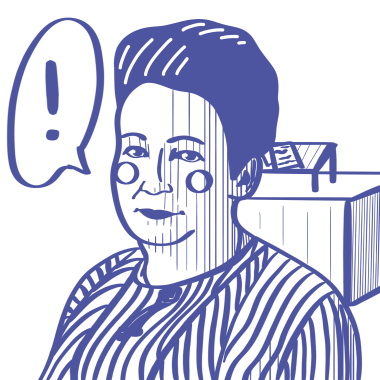
About Klara Barth
One of the first female parliamentarians in Germany
Klara Barth, born in Ommersheim in 1880, came from a family of teachers and initially became a teacher herself. In 1920, she was immediately elected to the Bavarian state parliament for the entire duration of the Weimar Republic. Her remarkable political career was accompanied by significant social commitment in institutions as well as in her personal and private life. Klara Barth's political activity ended with the beginning of the Nazi dictatorship, which the staunch Catholic was firmly opposed to[1].
Family
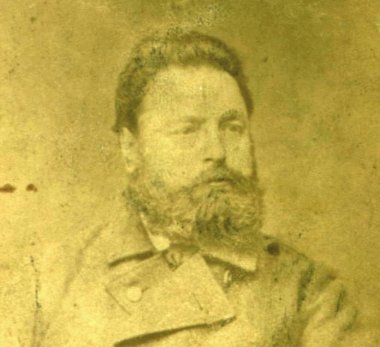
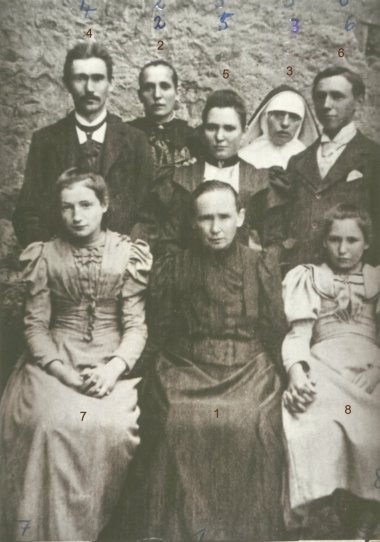
Klara Barth was born on 23 December 1880 to Kaspar Otto Barth, an elementary school teacher, and Maria Eva, née Müller, both from Reinheim (Gersheim), the seventh of eight children. She was baptised on 25 December in Ommersheim (Mandelbachtal).
With the exception of the eldest daughter, all the children in this family of teachers also worked as teachers, which meant that the daughters were obliged to remain unmarried.
Only Klara Barth's brothers and eldest sister married. There was great solidarity in the family and so it was natural that after the early death of this sister, her children were raised by two other sisters of Klara Barth.
One of Klara Barth's sisters, Sr M. Innocentia Barth O.P., became head of the St Magdalena Teachers' Training College in Speyer, while a brother was headmaster of the Oberrealschule Landstuhl.
Pupil and teacher
After primary school, Klara Barth attended a girls' secondary school. She then attended the Dominican Sisters of St Magdalena teacher training college in Speyer. She passed her second state examination in 1904.
From May to September 1906, she was a school caretaker in Albersweiler [school caretakers were not yet fully qualified teachers], then Klara Barth was transferred to Ludwigshafen to teach at a simultaneous school, where she continued to teach as a primary school teacher until the end of the First World War. The school was divided into eight locations at the time. In 1918, 196 teachers taught 10,415 children (>50 per teacher) at all locations combined.
Klara Barth's school was the Ludwigschule in Oggersheimer Straße. She was the school administrator from 1 October 1906. The first "auxiliary school" (now a special school) was established here in 1898, initially with two classes. This was followed by a third class and, at the beginning of the 1913/14 school year, the fourth class, which Klara Barth had prepared for by attending a training course for special needs teachers in Bonn.
Volunteering
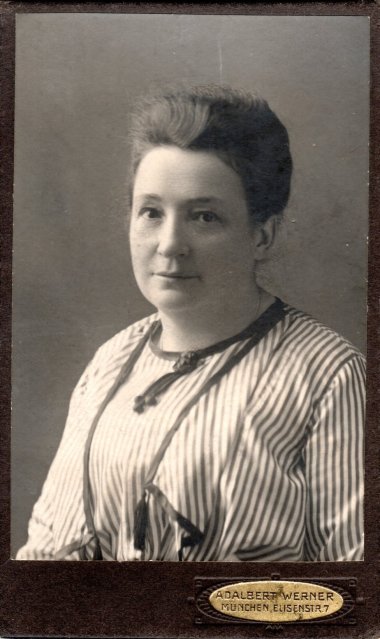
Although Klara Barth fulfilled her school duties with dedication, she realised that she could do far more for her own profession on the one hand, and for women and children in need in Ludwigshafen on the other.
She co-founded the Catholic Teachers' Association in Ludwigshafen and became its chairwoman in the Palatinate district. She was also a founding member and board member of the Elisabethenverein Ludwigshafen, a nursing association, and a close colleague of Karolina Burger (1879-1949). Karolina Burger's social work began with the admission of several needy children, which led to the founding of the St. Anna Foundation in Mundenheim, the nucleus of today's children's hospital of the same name.
Together with other women, they founded the Katholischer Fürsorgeverein für Mädchen, Frauen und Kinder Abteilung Pfalz e.V. in Mundenheim, to which St Annastift belonged. The association mainly had members in the parishes of St Sebastian (Mundenheim), St Ludwig (LU-Mitte) and St Michael (Maudach), but there was also resistance in the area surrounding the Annastift. Neighbours did not want the "difficult" children near them. Klara Barth was also chairwoman of the civic commission in the regional association of Catholic German Women.
In addition to the institutional network that is evident here, Klara Barth also had important personal contacts. Through her sister Sr M. Innocentia, she had contact with Edith Stein, who taught at the Höhere Töchterschule and the teacher training college at St Magdalena Convent from 1923 to 1932.
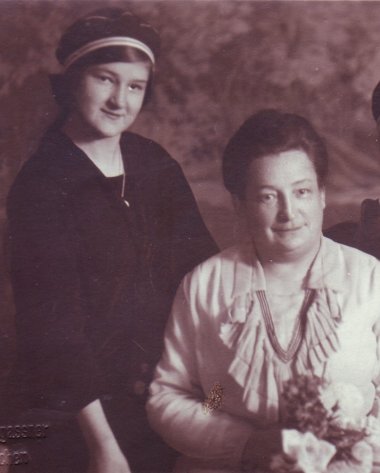
Politics
On 15 May 1908, all women were allowed to join a political party throughout the Reich. It is not known when Klara Barth exercised this right, but if she had joined a party before the end of the war, it would probably have been the Centre Party. Her ideological convictions speak in favour of this.
The Bavarian People's Party (BVP) was formed in Regensburg in 1918 by splitting from the Centre Party. The BVP was the strongest party in Bavaria from 1919 to 1933 and participated in all state governments. Its main concern was the federalist organisation of the Reich. Although it was open to all denominations, it was dominated by Catholic members. The BVP was in favour of women's suffrage and advocated social issues. Klara Barth's home region, the Saar Palatinate with the towns of Blieskastel, Homburg and St. Ingbert, belonged to the Saar region after the First World War, which came under the administration of the League of Nations.
Parliament
The elections to the city and municipal councils and to the Bavarian state parliament in 1920 were the first elections in the Palatinate in which women had the right to vote and stand for election. It was therefore not possible for women to gain political experience, for example by serving on town councils in preparation for a seat in the state parliament. The women who were now politically active were also not necessarily holders of party offices. The women who stood as candidates for state parliaments and the Reichstag could therefore at best draw on experience in honorary posts and associations and the resulting prominence and public recognition.
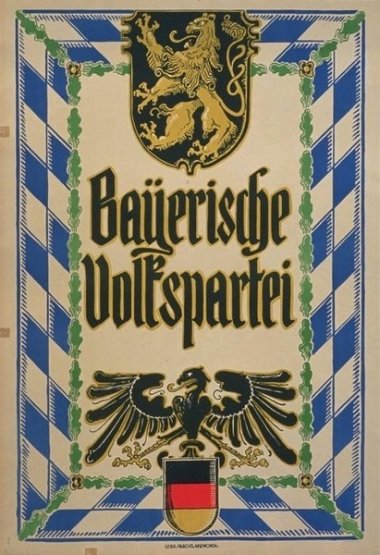
Klara Barth had this relatively favourable starting position. This may have contributed to the fact that she was nominated as a candidate by her party, the Bavarian People's Party, and that she actually received a mandate.
Christiane Pfanz-Sponagel, head of the Speyer City Archive, shows in her dissertation that women were initially placed on good lists because it was hoped that this would attract the votes of female voters, but that this was abandoned when it became clear that women did not necessarily vote for women. Klara Barth was not affected by this regression: Klara Barth's list places in the four state parliamentary elections were: twice 2nd place and twice 1st place.
As a Catholic unmarried teacher, Klara Barth belonged to one of the two typical groups of women (alongside married housewives) who took up political activity. She herself was also a staunch advocate of the life of a woman who dedicates herself to a public task and remains unmarried for this purpose, as her official statements make clear.
However, her parliamentary work was by no means so typical. While women in parliaments often dealt with social issues, Klara Barth was elected to the Committee on the Rules of Procedure and the Committee on Constitutional Affairs in her first parliamentary term from 1920 to 1924. In the course of her time as a member of parliament, Klara Barth was elected to other committees, including the Committee on Salaries and the Budget Committee. She was also a deputy member of the Standing Committee in the last free parliament before the Gleichschaltung in 1932/33.
Political positions
She gave her first short speech in parliament on 28 January 1921 on the issue of reinstating the teacher Rosamunde Schaffner to the teaching profession after she had married a pharmacist. Celibacy for female civil servants had been introduced in the German Reich in 1880 and initially abolished in the Weimar Republic. In Bavaria, however, it applied to women in accordance with the Elementary School Teachers Act; accordingly, Rosamunde Schaffner had to leave the civil service after her marriage. Citing her husband's inability to work due to a war injury, the former teacher asked to be reinstated. The DDP, SPD and USPD argued in favour, while a government representative and the BVP spoke out against her employment.
Klara Barth emphasised that the BVP was opposed to married female civil servants. In the end, the parliament rejected the reinstatement by a majority. In 1923, however, celibacy for female teachers was reintroduced throughout the Reich and was still defended by the Association of Catholic German Women Teachers in 1955. Here it becomes clear that Klara Barth also represented positions that we no longer share today.
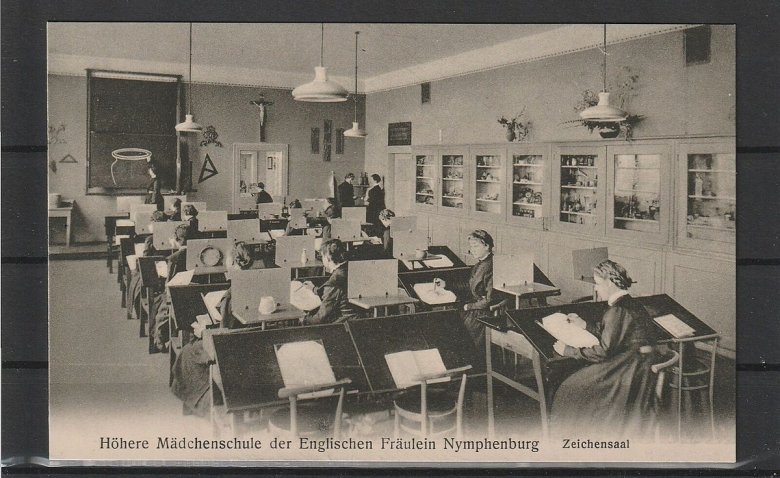
In 1922, Klara Barth gave a lengthy speech to the state parliament on issues relating to the status of teachers, the preservation of denominational schools, religious education, the curriculum and reading book issue, auxiliary schools, the fundamental rejection of married female teachers, a draft law on school supervision, girls' schools, home economics education and the importance of the work of housewives.
In a speech in February 1923, Klara Barth initially welcomed the improvement in the situation of teachers at girls' secondary schools. She then justified her party's rejection of co-education by saying that co-education was too mentally demanding for girls. Here, too, she was refuted by history and even more so by the present.
In 1925, Klara Barth spoke again about girls' and women's education. After a review of developments since 1911 and a brief description of the existing types of girls' schools, she explained that the forthcoming reform did not seek "equality ... but equivalence" and opposed the harmonisation of women with men, which was expressed in contemporary fashion.
Later on, Klara Barth shows herself to be a declared opponent of school sport, at least for girls. Once again, she was firmly opposed to co-education. At the same time, she attached great importance to subject lessons being taught by female teachers in the academically orientated girls' lyceums. She called for the preservation and state protection of public schools. Klara Barth defended the denominational school in the Palatinate. She campaigned for enough candidates from rural areas and the middle class for the Volksschule.
In a speech in 1926, Klara Barth gave a vivid account of the economic and social problems of the occupied Palatinate, with special reference to the Palatinate Saar miners, the shoe industry and small businesses.
In 1930, Klara Barth spoke in her third legislative period on the occasion of the end of the French occupation of the Palatinate and campaigned for support for the new beginning. She spoke twice more on the school system in 1930, on the reform of teacher training and the situation of schools, especially the denominational schools in the Palatinate in 1931. In the last free state parliament in Bavaria in 1932/32, Klara Barth spoke in the budget debate in December 1932 and gave reasons for various motions.
Away from politics
During her time as a member of parliament, Klara Barth was promoted to head teacher in 1924. On 1 January 1927, she received the papal order Pro ecclesia et pontifice for her ecclesiastical and social commitment.
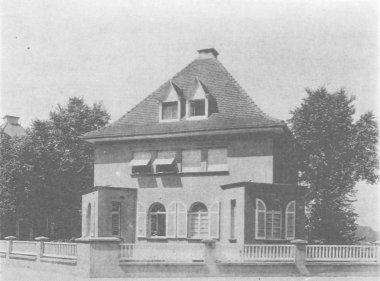
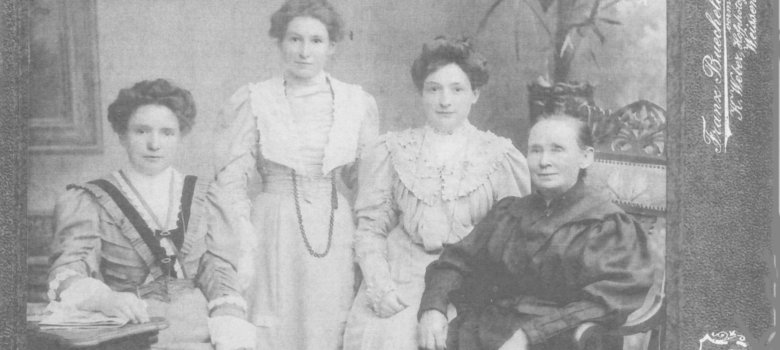
In the mid/late 1920s, she and two of her sisters - Lisette (1874-1951) and Anna (1883-1957) - bought a house at Austraße 1 on Parkinsel (now Otto-Dill-Straße 1) in Ludwigshafen. All three sisters were single and their house was open to the whole family. Among other things, the sisters looked after the children of their deceased sister Anna Maria Franziska Oswald (1865-1912), the children of their deceased brother Otto Barth and also the second wife of their brother-in-law Jakob Oswald and her children after Jakob's death.
A close friendship developed between Klara Barth and Ellen Ammann, which continued in the next generation of the family. There was also a close relationship with the last Bavarian Minister of the Interior before the Gleichschaltung, Karl Stützel from Speyer, who worked with great commitment to push back the National Socialists.
Conflict with the NSDAP
Her Catholic faith, her view of humanity and her membership of the BVP, which was strongly committed to federalism, made Klara Barth a natural opponent of National Socialism. In one of her state parliament speeches in 1926, she had already attacked an NSDAP supporter in the state parliament.
As a member of the Catholic women's organisations, she took part in events against the new rulers in the Reich in the spring of 1933, as is documented in a speech at the Catholic Women's Association in Frankenthal. She accused Hitler of dividing the German people into "a national and a non-national front" and called on the women present to vote for the Catholic parties Centre and BVP.
The charitable organisations to which Klara Barth belonged in a leading position also came into conflict with the National Socialists: the Association of Catholic German Women Teachers and the Welfare Association in Ludwigshafen.
On 23 and 28 June 1933, she was taken into protective custody during an action against the BVP in Munich and detained until 5 July. After that, she remained a member of the Landtag for a short time, as she was one of the deputies who had to handle the dissolution of the Landtag. She remained there until 14 October. According to her niece Ingrid Wagenknecht, she was later held in protective custody several more times.
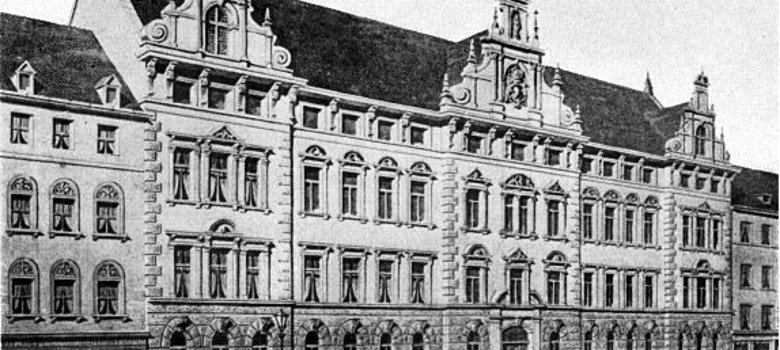
After the enforced end of her mandate, Klara Barth was reinstated as a teacher in the 1932/33 school year. In a letter dated 3 July 1934, she was transferred to Landau, although it is not clear whether this was a punitive transfer or a transfer at her own request. The wording of the order, which refers to the teacher's "own wish", does not necessarily correspond to the truth. During her time in Landau, Klara Barth lived at the Institute of the English Ladies.
A Gestapo file on Klara Barth is not available in the Speyer State Archives, but there is a "List of outstanding enemies of the movement and state" from 1936, in which the BVP, Centre and aid organisations in Ludwigshafen am Rhein are listed first: "Barth Klara, born 23.12.80 Ommersheim, not Jewish, main teacher, Member of Parliament 1928/33".
Death 1940 in Ludwigshafen
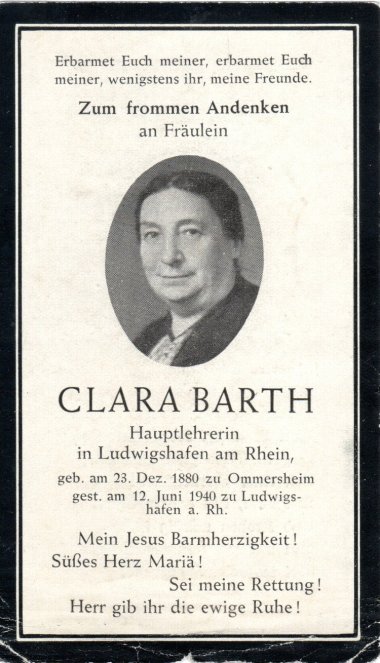
The family records that Klara Barth died on the evening of 12 June 1940 while visiting a family friend, Dr Roßmann. The man of the house wanted to accompany her home, but his bicycle, which he wanted to use to cycle home, was out of order. As long as Dr Rossmann was busy repairing it, she went ahead. When he caught up with her, he found Klara Barth lying lifeless on the ground. Police investigations revealed that she had succumbed to a heart attack.
As a member of the Third Order of Dominican Sisters, Klara Barth was buried in her habit at the cemetery in Ludwigshafen to great sympathy. A brief obituary was published in the diocesan newspaper Der christliche Pilger. No further tribute was paid to the long-serving member of the state parliament on the occasion of her death.
Abridged and slightly modified according to: Dr Lenelotte Möller, historian and headmistress of the Friedrich-Magnus-Schwerd-Gymnasium in Speyer
Published: 05.12.2025; Last updated: 30.03.2025.
Quotes
She helped many people who brought their concerns to her. She was a member of the board of the St Anna-Stift welfare home in Ludwigshafen-Mundenheim. She provided homeless people with a place to stay and work. She made sure that fallen girls and their children had a roof over their heads and received an education so that they could master their future lives."
Memoirs of Therese Heisel, née Barth. (1915-2011), daughter of Klara Barth's brother Georg, written down in the 1980s. Kindly provided by Ingrid Wagenknecht.
Around the first half of June, when the campaign in the West was gradually coming to an end, I brought home the NAZ evening newspaper. The first person I came across was Aunt Klara, to whom I immediately handed the newspaper, on which was written in large letters: "Coventry razed to the ground". She must have realised at the time that I, too, was getting excited following the external influences.
In any case, she put her arm around my shoulders and literally said: 'You must keep what I am about to tell you to yourself. Remember this one thing: What is right for us today will be cheap for them in two years' time.'
She then explained to me that England is not only the actual mother country, but that the following countries are also behind it: Canada, Australia, India, colonies in Africa, etc. In any case, as a thirteen-year-old boy, this instruction made a great impression on me and gave me food for thought.
(Klara Barth died in August 1940.)
As the war continued, which had now degenerated into a world war, the number of air raids on our country increased in 1942 and 43. When I often saw the bomber clusters as they drew their contrails in the sky and carried their bomb load into the Reich, I often had to think of Aunt Klara. How right she was with her opinion that one day it could be cheap for them, even very, very cheap."
Memoirs of Jakob Josef Oswald (1927-2016), who stayed with the Barth siblings in Ludwigshafen as a 13-year-old after the evacuation of his home town of Reinheim in 1940. Kindly provided by Ingrid Wagenknecht.
Footnotes
[1] On this and the following: The author published a more detailed version of this text in 2020, where further sources and references can be found. Möller, Lenelotte: "Eine hervorragende Feindin der Bewegung": Die Landtagsabgeordnete Klara Barth aus Ommersheim, in: Wiegand, Hermann et al. (eds.): Reformation - Aufklärung - Revolution - Emanzipation. Contributions to the history of culture, political ideas and south-west German regional history. Festschrift for Wilhelm Kreutz on his 70th birthday, Ubstadt-Weiher 2020, pp. 333-350.
Special thanks go to Mrs Ingrid Wagenknecht, great-niece of Klara Barth, who provided important information about her great-aunt and the whole family.
[2] This information comes from the memoirs of Jakob Josef Oswald (1927-2016), son of Jakob Oswald (born 1988), a nephew of Klara Barth. This information was kindly provided by Ingrid Wagenknecht, grandniece of Klara Barth.
Read more / Literature
Möller, Lenelotte: "Eine hervorragende Feindin der Bewegung": Die Landtagsabgeordnete Klara Barth aus Ommersheim, in: Wiegand, Hermann et al. (eds.): Reformation - Aufklärung - Revolution - Emanzipation. Contributions to the history of culture, political ideas and south-west German regional history. Festschrift for Wilhelm Kreutz on his 70th birthday, Ubstadt-Weiher et al. 2020, pp. 333-350.
o.A.: 100 years of women's suffrage - Klara Barth from Ommersheim was one of the first female parliamentarians, in: Stadt St. Ingbert (ed.): Das offizielle Mitteilungsblatt - Natürlich für St. Ingbert, December 2018, p. 23.
Pfeiffer, Manfred: Saarland & Weimar Republic. An excursion into our history 1918-1935. Brochure accompanying the exhibition 2020. 2nd revised edition, Mandelbachtal 2022.
- For Klara Barth, see p. 25-26.
Supported by: