


The Blieskastel Agricultural College –
: the birthplace of the Saar Rural Women’s Association (Landfrauen-Verband Saar e.V.)
Between 1922 and 1970, young people were trained at the Blieskastel Agricultural College, new ideas for agriculture were developed – and, in 1957, the Saar Rural Women’s Association was founded.
What were the reasons behind the association’s founding, and which committed women were behind it? This page explores these questions.
You can click on the smaller images to enlarge them.
The following texts were written by: Raffaela Berger, Head of the Blieskastel Municipal Archives
Published: 3 July 2026; Last updated: 3 July 2026.
Historical background
The founding of the Saar Rural Women’s Association in 1957 was the result of a process that had begun decades earlier and was linked to the development of the Blieskastel Agricultural College and the early days of the rural women’s movement.
The Blieskastel Agricultural College
Originally, the agricultural college, founded in 1905, was based in Homburg, and its pupils came from the surrounding villages as well as from what was then the district of Kusel [1]. The territorial changes and new boundaries brought about by the post-war period in the Saar region cut off a large part of the school’s previous catchment area. In 1922, the school was re-established following its relocation to Blieskastel. Initially, lessons took place in premises on the Schlossberg until the school moved to Villa Borck at Raintal No. 1 in 1938.
In the winter term of 1929/30, girls were admitted for the first time to the Agricultural College and the newly established Rural Women’s College. Anna Wirth, a native of Homburg, was the first female teacher there and taught until 1937. The curriculum offered the next generation of farmers in our region a combination of practical agricultural training and farm management advice.
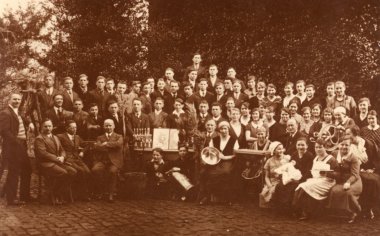 © Blieskastel Town ArchivesGroup photograph of pupils at Blieskastel Agricultural College, circa 1934 (Blieskastel Municipal Archives, Photograph Collection, Reference 40 No. 2452, photographer unknown).
During the Second World War, school operations came to a standstill, partly due to the evacuations of 1939–40 and 1944–45, and partly due to the school building being used for military purposes. Classes only resumed gradually from 1946 onwards. By the early 1970s, structural changes in agricultural policy had led to a significant reduction in the number of farms and, ultimately, to a decline in pupil numbers. In 1970, the agricultural college closed its last remaining department, and the agricultural advisory service moved to the premises of the former dairy in Webenheim.
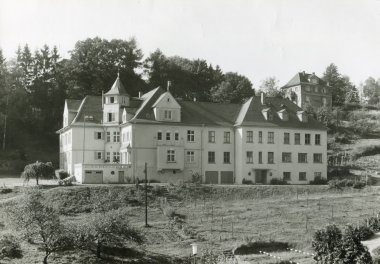 © Blieskastel Town Archives / Photo: KirschmannBlieskastel Agricultural College in the Raintal, No. 1, undated (Photographer: Foto Kirschmann, Blieskastel Town Archives, Photographs, Collection 41, No. 19).
The Rural Women’s Movement
Elisabeth Böhm, née Stepphuhn (1859–1943), is regarded as the founder of the rural women’s movement.[2] In her East Prussian hometown of Rastenburg (now Kętrzyn, Poland), she founded the first agricultural housewives’ association in 1898 with the aim of raising public awareness of women’s economic contributions to agriculture. Women’s work was to be recognised on an equal footing with that of men. Likewise, girls and women were to be given access to professional training and further education.
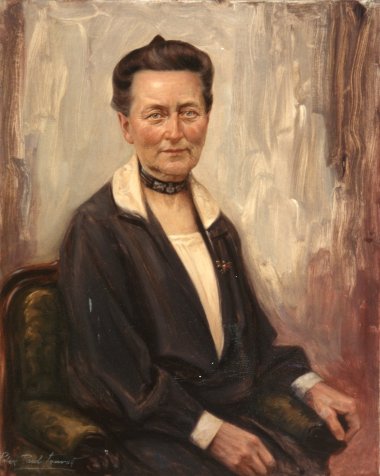 © East Prussian State Museum with its German-Baltic DepartmentElisabeth Boehm, 1929, painting by Tomrod (on loan from the German Rural Women’s Association to the East Prussian State Museum).
Building on these ideas, by the 1920s more and more women were organising themselves to benefit from the mutual exchange of experience and knowledge regarding the production and marketing of agricultural products. Böhm’s proposals for the professional organisation of rural women were incorporated into the statutes of the agricultural housewives’ associations of the early 20th century and continued to be taken into account by the German Rural Women’s Association, which was founded in 1948. With the collaboration of Elisabeth Böhm, the first rural women’s schools were established from 1912 onwards, marking a significant step towards the systematisation of agricultural and home economics education.[3]
Blieskastel as the birthplace of the Saar Rural Women’s Association
It is certainly not incorrect to describe the Blieskastel Agricultural College as the cradle of the Saar Rural Women’s Association. However, it should not be forgotten that the home economics departments of the other agricultural colleges still in existence in the Saarland at that time played an active role in the development of the Rural Women’s Association. “What took place in our region following the association’s foundation in Blieskastel can be described as a veritable explosion in the establishment of local branches.”[4]
On Thursday, 10 January 1957, 28 women from across the Saarland gathered at the Blieskastel Agricultural College for the founding meeting of the Landfrauen-Verband-Saar e.V.[5] Their aim was“to better represent the interests of women farmers and to continuously support them in developing their professional knowledge and skills.”[6] Further local branches were established later that same year, not least thanks to the commitment of rural women such as Beate Koch (managing director and head of the Blieskastel Agricultural Home Economics School) and Annemarie Lindemann (regional chairwoman).“Following the association’s foundation, Beate Koch, together with Anne-Marie Lindemann, played a key role in establishing many local branches and, with great enthusiasm, was able to explain the aims and purpose of the Rural Women’s Association to interested women.”[7]
The women behind the start-up
There was also a close link between the agricultural college and the founding of the Rural Women’s Association, with its local branches, in the Saarland. Despite gaps in the historical record and, in some cases, contradictory accounts, some information about the work of the ‘first rural women’ in our region has survived.
Anna Juliane Maria Wirth
1903–2003 | First home economics teacher at the Blieskastel Rural Women’s School
Anna Juliane Maria Wirth was born on 9 August 1903 in Homburg, the daughter of railway assistant Ludwig Wirth and Anna Carola Emilia Wirth, née Blaufus.[8] She was the first woman to teach at the Rural Women’s School in Blieskastel between 1929 and 1937. In August 1929, the idea of incorporating home economics courses for farmers’ daughters into the curriculum of the Blieskastel Agricultural School began to take shape. The creation of a girls’ class initially required the appointment of a suitable teacher at the school, which had previously been run by men and was intended for boys. In the recruitment process for the post of teacher of agricultural home economics, Anna Wirth, who had previously worked at the District Farmers’ Chamber, prevailed over several female competitors.
When she took up her post in October 1929, she moved from Landstuhl to Blieskastel, where she remained until the end of her first contract.[9] Owing to her performance, her contract was extended further in 1930 until, with effect from 1 April 1931, she was taken on as a permanent member of staff at the Blieskastel Rural Women’s School. As a home economics teacher, Anna Wirth taught her pupils the subjects of cooking, housework, food science, home management, domestic bookkeeping and arithmetic, German and correspondence, life skills and etiquette, health education and physical education. In 1937, she retired from her post as a subject teacher and adviser at the Rural Women’s School, which had an attached agricultural advisory service. Anna Wirth passed away in the Southern Palatinate shortly before her 100th birthday[10].
Beate Koch
Head of the Agricultural Home Economics School, co-founder and managing director of the Landfrauen-Verband-Saar e.V.
If it is stated above that the Blieskastel Agricultural College was the cradle of the Saar Rural Women’s Association, then – to stick with the analogy of a birth – we must describe the head of the home economics department at that college as the midwife. It wasshe [Beate Koch] who sent out the invitations to the founding meeting and had drawn up the constitution.”[11]
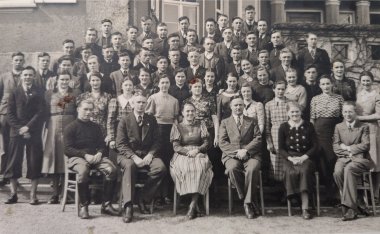 © Blieskastel Town ArchivesClass photograph of the pupils at Blieskastel Agricultural School during the 1938/39 school year with their teachers, including Beate Koch in the front row, third from the left (Blieskastel Town Archives, Photograph Collection, Inventory 40 No. 2565, Photographer: unknown).
Information about Beate Koch first became available from 1937 onwards, when she took up her post at the agricultural college in Blieskastel. She taught there as a subject teacher and head of the agricultural home economics school from 1937 to 1939 and again from 1950 to 1965. Whilst still in post, Koch spearheaded the founding of the Landfrauen Verband Saar e.V. From its foundation on 10 January 1957, she led the regional office in Blieskastel through its early years. Due to her concurrent teaching duties, she handed over the management of the association to Hedi Nietzert in 1960.[12] Following Nietzert’s departure in 1969, Beate Koch took over as acting head of the regional office until Annegret Fedisch was elected on 1 January 1972. She remained deputy managing director thereafter. In recognition of her outstanding achievements and service, the German Rural Women’s Association honoured her with the Golden Bee. The Saarland Chamber of Agriculture awarded Beate Koch the Golden Chamber Prize Coin.
Annemarie Charlotte Agnes Lindemann
1909–1999 | née Rössler | Founding member of the Saarland Rural Women’s Association and its first regional chairwoman
Annemarie Charlotte Agnes Rössler was born on 20 March 1909 in Berlin-Tiergarten.[13] On 27 November 1939, she married Karl Alexis Lindemann (1899–1988), a bank clerk and landowner, in Pyritz (now Pyrzyce in Poland)[14]. He moved from Saarbrücken to Blieskastel in 1925 and took over the Lindenfels estate in Blieskastel-Alschbach between 1926 and 1928. It is only possible to estimate roughly when Annemarie moved into the Lindenfels estate, sometime between mid-1940 and before June 1947.[15] In June 1947, the French occupying forces ordered the expulsion of the Lindemann family from the Saarland:“The expulsion itself did not, however, come into effect, as the husband was at that time subject to various forms of political persecution and had to endure periods of imprisonment, which were, however, unrelated to the expulsion order. The formal expulsion order was revoked on 20 December 1949, without the family having left the Saarland”.[16]
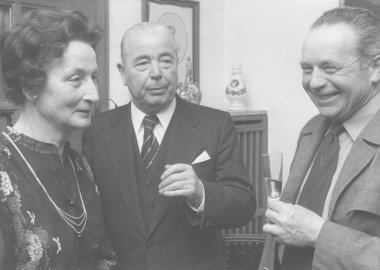 © Erich Isenhuth / Saarland State ArchivesAnnemarie Lindemann (left) with Minister-President Dr Franz Josef Röder (centre) on the occasion of her husband Karl Alexis Lindemann’s 80th birthday, 6 April 1979 (Photographer: Erich Isenhuth, Saarland State Archives, reference number: B StK, Reg.Röder 3899/3).
Annemarie Lindemann was elected regional chairwoman at the founding meeting of the Landfrauen Verband Saar e.V. and led the organisation through its early years alongside Beate Koch. In 1974[17], at the age of 65, Lindemann did not stand for re-election as regional chairwoman. In recognition of her services to rural women, she was awarded the Federal Cross of Merit, the Order of Merit of the Saarland[18] and the Golden Pin of Honour from the Saar Farmers’ Association. After stepping down, Annemarie Lindemann remained honorary chairwoman and lived with her husband at Gut Lindenfels. She passed away in Homburg in October 1999 at the age of 90.
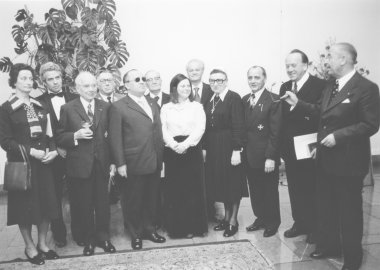 © Erich Isenhuth / St. Ingbert Municipal ArchivesAward ceremony for the Saarland Order of Merit on 10 March 1975, from left to right: Annemarie Lindemann, Karl Schell, Prof. Dr Hermann Pies, Fritz Nilius, Willi Buchmann, Johannes Waschbusch, Monika Schwinn, Prof. Dr Heinrich Konietzny, Gertrud Sonnenburg, Karl Heinz Knecht, Rudi Müller, Minister-President Dr Franz Josef Röder (Photographer: Erich Isenhuth, St Ingbert City Archives).
Footnotes
[1] On this and the following points: Publications of the Blieskastel Agricultural School (ed.): 25 Years of the Homburg/Blieskastel Agricultural School 1905–1930; 30th Annual Report of the Blieskastel Agricultural School, Rural Women’s School and Agricultural Advisory Centre, 1934–1935; 50 Years of the Blieskastel Agricultural School 1905 to 1955; 75 Years of the Blieskastel Agricultural School and Agricultural Advisory Service 1905 to 1980. Blieskastel Town Archives, Archive Library, Collection F Nos. 33 to 36.
[2] Kuessner-Gerhard, Liselotte, “Boehm, Elisabeth, née Steppuhn” in: Neue Deutsche Biographie 2 (1955), p. 380 ff. [online version]; URL: https://www.deutsche-biographie.de/gnd120510693.html#ndbcontent [28 April 2026].
[3] Ibid. See also: 1957–2007 – 50 Years of the SaarLandFrauen e.V. Regional Association,‘Founder Elisabeth Boehm (1859–1943) and her demands – more relevant than ever. A Life Dedicated to Rural Women, pp. 14–18. Blieskastel Municipal Archives, Archive Library, Collection REG-DC-BLK No. 90.
[4] Norbert John, former chief executive of the Farmers’ Association, in: 1957–2007 – 50 Years of the SaarLandFrauen e.V. Regional Association, p. 19.
[5] Minutes of the founding meeting of 10 January 1957, ibid., p. 12.
[6] https://saarlandfrauen.de/?page_id=66 [27 April 2026].
[7] Norbert John, in: 1957–2007 – 50 Years of the SaarLandFrauen e.V. Regional Association, p. 20.
[8] Homburg Municipal Archives, Birth Register No. 161/1903.
[9] On 1 April 1930, she moved back to Landstuhl; Blieskastel Municipal Archives, Blieskastel 4 Nos. 128 and 129, Blieskastel Register of Residents 1925–1937.
[10] Homburg Municipal Archives, Birth Register No. 161/1903, marginal note.
[11] Norbert John, in: 1957–2007 – 50 Years of the SaarLandFrauen e.V. Regional Association, p. 24.
[12] Hedi Nietzert was regional director from 1960 until she reached retirement age in 1969.
[13] Berlin State Archives, Berlin Tiergarten Birth Register, No. 816/1909.
[14] Karl Alexis Lindemann, born on 6 April 1899 in Saarbrücken; see the Saarbrücken (now Saarbrücken I) birth register, no. 228/1899; Marriage register of the Pyritz Registry Office, Stettin administrative district No. 104/1939; died on 25 March 1988 in St. Ingbert; see the death register of the St. Ingbert Registry Office No. 125/1988. Blieskastel Municipal Archives, Blieskastel 4 Nos. 128 and 129.
[15] The entire population of Blieskastel was evacuated from the Red Zone in September 1939, and they were not able to return until mid-1940.
[16] Saarland State Archives, State Compensation Office (LEA), file no. 15347, decision dated 7 April 1965.
[17] Norbert John in: 1957–2007 – 50 Years of the SaarLandFrauen e.V. Regional Association, pp. 17 and 21. According to an article in the SZ, the election took place on 12 March 1974 at the Kolpinghaus in Saarbrücken. The SaarLandFrauen website states that Annemarie Lindemann stepped down in 1972, which contradicts Norbert John’s account. See https://saarlandfrauen.de/?page_id=66 [29 April 2026].
Further reading / literature / sources
Sources
Saarland State Archives, State Compensation Office (LEA), file no. 15347.
Berlin State Archives, Berlin Birth Register, No. 816/1909; Marriage Register of the Pyritz Registry Office, Stettin Administrative District, No. 104/1939.
Saarbrücken City Archives, Saarbrücken Birth Register (now Saarbrücken I) No. 228/1899.
St. Ingbert Municipal Archives, Death Register No. 125/1988.
Blieskastel Municipal Archives, Collection 4, Nos. 128 and 129, Blieskastel Register of Residents 1925–1937.
Homburg Municipal Archives, Birth Register No. 161/1903.
Online sources
Kuessner-Gerhard, Liselotte, “Boehm, Elisabeth, née Steppuhn” in: Neue Deutsche Biographie 2 (1955), p. 380 ff. [online version]; URL: https://www.deutsche-biographie.de/gnd120510693.html#ndbcontent [28 April 2026].
East Prussian State Museum with its German-Baltic Department: https://blog.ol-lg.de/im-zeichen-der-biene-elisabet-boehm-begruenderin-der-landfrauenorganisation/ [29 April 2026]
https://saarlandfrauen.de/?page_id=66 [27 April 2026].
Literature
Publications by the Blieskastel Agricultural College (ed.):
25 Years of the Homburg/Blieskastel Agricultural School, 1905–1930.
30th Annual Report of the Agricultural College, Rural Women’s College and Agricultural Advisory Service, Blieskastel, 1934–1935.
50 Years of the Blieskastel Agricultural College, 1905 to 1955.
75 Years of the Blieskastel Agricultural College and Agricultural Advisory Service, 1905 to 1980.
SaarLandFrauen (eds.): 1957–2007 – 50 Years of the SaarLandFrauen e.V. Regional Association, 2007.
Supported by: