How can STEM education be integrated into the everyday life of childcare centres? And how can educational professionals be persuaded to explore topics from the fields of maths, IT, science and technology ("STEM") with children without any special prior knowledge?
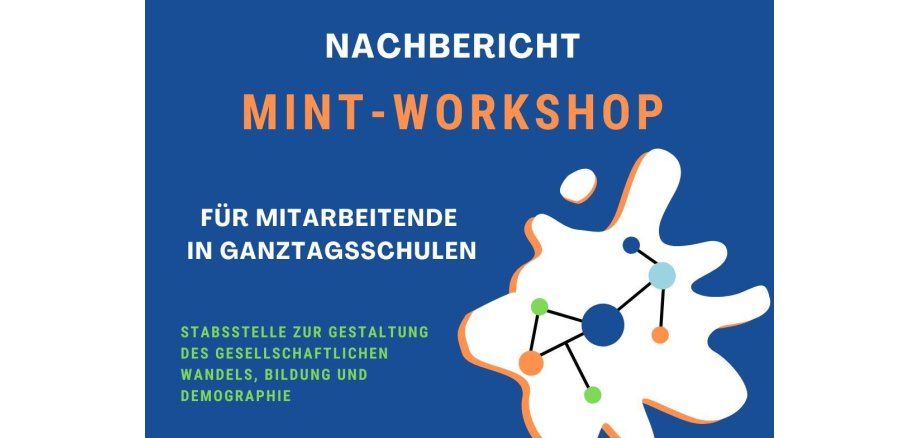
With a practical workshop for employees in voluntary all-day schools, the Saarpfalz district has aimed to do just that, thereby setting another milestone in its strategy for STEM education in the district.
The event was organised in close cooperation with the Saarland Metal and Electrical Industry Association, which is highly committed to promoting STEM subjects. The event was also supported by the Federal Ministry of Research, Technology and Space as part of the MINT Cluster III funding programme.
This workshop focussed on practical approaches. Anja Dilk, trainer at the "Kinder forschen" foundation, impressively demonstrated that STEM can be found "everywhere" in everyday life and showed how STEM experiences can be implemented in everyday educational activities using the simplest materials and methods. Even small, playful impulses can arouse great curiosity and a joy of discovery in children. The special feature: the workshop did not end when the children left the seminar room, but continued seamlessly in everyday life. Thanks to prepared material boxes, the use of which was taught in practice, the participants were able to continue what they had learnt immediately afterwards in their FGTS with the children. In addition, the event offered the opportunity to exchange ideas and network - also important prerequisites for ideas to be passed on and permanently anchored in everyday life. Due to the high demand, a follow-up workshop is planned.
District Administrator Frank John commented:
"STEM education is future education. That's why we are actively shaping this in the Saarpfalz district: as a partner in the SaarMINT network and in collaboration with committed stakeholders such as ME Saar - for the common goal of giving all children access to STEM at an early age."
The measure is part of a comprehensive strategy of the Saarpfalz district, which has been increasingly committed to strengthening STEM education throughout the district since the start of the federal MINT Cluster 3 funding programme - with a particular focus on girls and educationally disadvantaged children and young people aged six to 16. Specific programmes have already been implemented in schools, among other places, and activities in the pre-school sector are being planned. The networking of stakeholders in the Saarpfalz district is also an important pillar of the activities.
The programme in the Saarpfalz district is managed by the staff unit for shaping social change, education and demography, which is also home to central educational institutions such as the district adult education centre and the media centre with a focus on STEM subjects. This location allows impulses to be introduced directly into the structures of educational institutions, precisely where they have a direct impact.